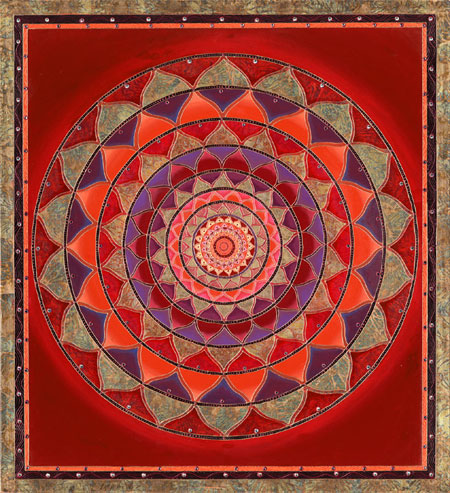
Now that you’ve read about the concept of Mandala art and its history, you’re ready to learn how to create one and exercise the mandala’s power.
The core of mandala designs is the circle. You are not bound by any particular colors or materials to create your mandala art, so let your feelings and instincts guide you through the creative process.
Decide What Art Materials You Need
You will first need to select your drawing materials. Again, you are not limited here…some ideas to help you get started might be markers, watercolors, pastels, colored pencils, oils, etc. You will also need something to draw or paint on like a piece of paper, canvas, poster board, or anything else you can think of. I would suggest something around the size of 12×18 inches. If you have a compass lying around (or anything that will help you draw a circle), that would be helpful as well. Hint: you can use anything round and solid…a cup, a pan, or anything else that will help you draw nice clean circles.
A Good Location Is Important
It is also recommended that you create your mandala in a space that provides the least amount of distractions. The experience is meant to be a personal one. Unless, of course, you are participating in a group mandala.
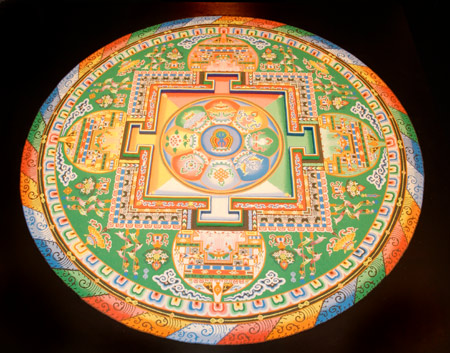
In response to the September 11th tragedies, twenty Buddhist monks constructed a sand mandala (sacred painting) at the Sackler gallery. This seven-foot-square mandala, one of the largest ever created in the West, was offered for the healing and protection of America. In addition, the monks participated in chanting, meditation, and other traditional healing ceremonies.
Let Your Feelings & Emotions Inspire You
Again, there are no rules or constrictions with regard to mandala designs. You don’t have to use only circles, though your art should have some semblance of a circular design. Otherwise, you can do whatever strikes you. In fact, it’s encouraged to let your feelings inspire your mandala art and designs.
Your finished mandala will represent and reflect who you were at the time of creation. If you want, you can give your mandala a title and date of creation.
Now That You’ve Finished Your Mandala Art Activity
Once you’ve finished your mandala art activity, take note of the colors you used. Recognize, maybe even write down, what the predominant colors are in your mandala. Also take note of the least-used color(s). Now look at the images and shapes you’ve created. Take notice of any hard and soft lines, jagged or smooth edges. Are there any areas of high contrast? Now write down, in detail, your feelings and/or memories when you think about the colors, shapes, images, and designs on your mandala. You should be able to make some connections between your mandala and the feelings and emotions that you experienced while creating it.
This is meant to be a very personal and introspective activity and process, so the results are bound to vary. Again, it’s important to recognize that your mandala is a symbol, a reflection, of who you were when you created it. Ideally, the process of creating the mandala results in some form of self-healing, self-expression, and/or self-exploration.
Good Luck!
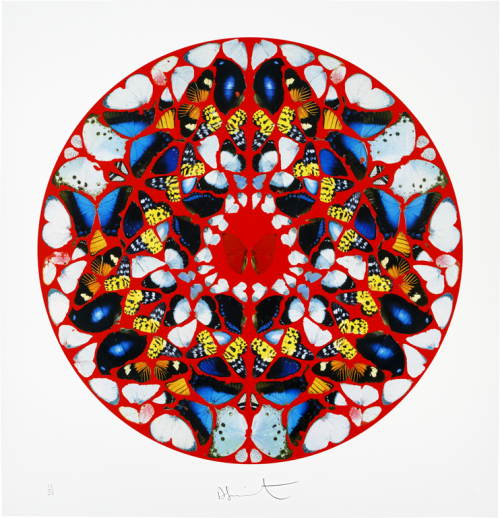
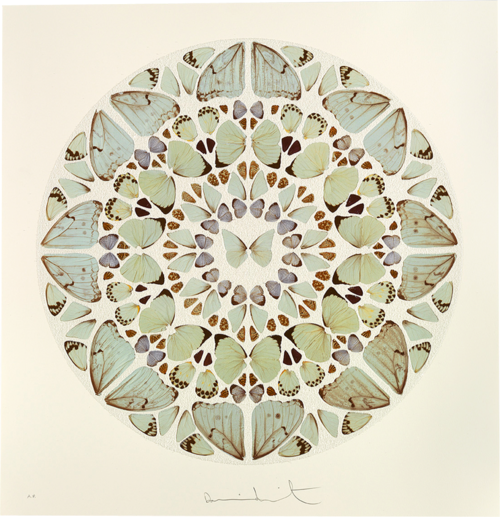
Update: Check out some of these mandala-inspired artworks posted on Art Therapy {Lite}:
Thanks very much for this article. I love the idea of creating mandalas because you can make them as intricate or as simple as you want and hopefully there can be less worry about whether it is “good enough” as a creation. I might also suggest including in the writing if you are so inclined, a poem about the mandala, what it evokes in you or how the process affected you, etc. Of course a poem is not necessary, but it can be a companion to the mandala that becomes a part of the artwork and deepens the exploration of your inner world. Thanks, Phyllis
Phyllis, I think that’s a fantastic idea! A poem would complement the mandala beautifully. I would only add that the individual should write in a way that makes them feel most comfortable…whether that is by telling a story, writing a poem, prose, or any sort of free-form writing. Poetry therapy is something I eventually hope to add to this site as well. Thanks for the great comments Phyllis 🙂
Hi… thanks for the great site and much-loved ideas!
I just want to add that Mandalas of all kinds can be a very good meditation tool unto themselves and the artist. As a Buddhist artist who regularly creates Mandalas myself, I have noticed that there are two very important parts of the process:
1) Meditation is a process of “emptying” the mind of mental and emotional “clutter” or “chatter”. So it helps to be focused on “releasing” or “emptying” when involved in this creative process… the “thinking” part is not nearly as important as the enjoying and “letting go” part.
2) Some Mandalas (like the sand mandalas you mention) are destroyed after they have been viewed because part of the process is learning the laws of impermanence… we must learn on an emotional and spiritual level that nothing lasts forever and it harms us to become attached to things that ultimately are not our only source of happiness. If a person cannot bring themselves to destroy their creation, they might at least consider selling it or giving it away as a “gift” to someone who might appreciate it. Once you have enjoyed creating your mandala, it has already served its purpose for you…
Once again, thank you so much for sharing this blog with us!
– Jarrett
Jarrett,
Thanks for emphasizing these parts of the process. The journey is just as important, if not more, than the destination.
Hi,Jarrett,
I love using the mandala as a process in my women’s group. We used the symbols in a group process called the mandala and the self. I first lead them on a creative visualization meditation of color, shapes, patterns, and images of which they used in the creating of their mandala. Afterwards, they wrote their own interpretation around the mandala and shared what they wanted in group. I have also used the symbol of the mandala in a collage of magazine pictures that represents the core self and parts of the self. I am planning on using the mandala in my journal group as a process as well. Thanks for sharing and the continued inspiration of your website. I am thinking of doing a mandala jouranl. I will let you know how it goes. Joy
@Joy: Great use of the mandala…I’d love to hear about some of their interpretations and when you’re ready to share your thoughts on doing a mandala journal feel free to put them in the comments or drop me a line if you’d like to write a guest post about it! Great uses of the mandalas…thanks everyone!
Thank you for your site. I am an artist and often lead arts workshops. I created a mandala in college that began my journey as an artist. Later this month I will be doing a workshop, introducing the mandala to non-artist. Because of their simple form and potential visual power, they are a great tool for dis-covering and re-covering wounded creativity. Thanks again for the forum, Rachel
@Rachel: Thanks for the generous comment! I’d love to hear how your workshop goes at the end of the month. Thanks!
the mandala art activity sounds like another awesome idea to help client’s express thoughts and feelings! I will surely try to use this activities with my child/teenage clients.
This is a great site. I just happened upon it while looking up Art Projects to do with the children I work with every day. 2 1/2 to 6 year old children. I can wait to make mandalas with them. It will be exciting to see what designs and shapes they will use. Thanks for all the insight from everyone else who as commented on this project!
I used mandalas frequently in my work as an art therapist and found them effective on many levels. Now retired, I use the form for personal expression & meditation. I have a full set of MARI® (Mandala Assessment and Research Instrument) cards, interpretation materials and examples, and lots of books on Mandalas. Due to space limitations I’m ready to let these materials go & would love to see them go to someone who will actually use them productively. I’d be willing to sell all the materials for a minimal amount plus shipping costs. E-mail me and I’ll provide a complete list of the materials & we can work from there.
I am just finding this, and I suppose I’m probably too late, but you never know. Do you still have the Mandala Art materials for sale? I also am a mandala artist and teacher. You can see a bit about me and see my work at MandalaGallery.com . Thank you ~ Janine
I would like to know how much you are selling the MARI cards etc. for. Thanks, Rosemary
Dear ROsemary,
I’m a psychologist and art therapist in Brazil. These mandalas research material that you talked about are very rare to find around here. If you material’s still available, please let me know.
best regards!
Patricia, in reply to your May 23 posting, the materials are still available and I would love to have them go to a practicing therapist who could use them. I ws going to place them on eBay, but if you would like them I would be more than happy to work out an arrangement to send them to you. I know these materials are difficult to find but I am not looking to make a profit and will sell them for what I paid originally plus shipping. Please contact me at haikutaxi@gmail.com and we can discuss.
What a joy to find such sharing thoughts! I have stumbled onto the world of Mandalas and hope to share it with some elder residents at a place I volunteer. As a “evolving” artist, I want to incorporate the making of Mandalas in an art class I will be introducing. Does anyone have any experience in presenting how to teach/show Mandalas to older people? (Some are in rehabilitation, others are permanent residents.) Any suggestions would be appreciated. Thank you!
I love the website. I am responding to Rosemary who has MARI materials for sale. I am interested if she still has the material please write me back.
Good luck!
Liz Acevedo
Hi …
Looking forward to connecting with you …
Where did you find this mandala ?
Did you create it ?
Beautiful ..
Thank youo for your reply….
Hi, I recently did mandalas with my classes. They loved it. I used black paper sqared (9″x9″). Pre folded it in halfs. (diagonally and top to bottom) so that there were 4 creases making eight triangles). Then I had each student select 4 paint colors and they puts blobs of paint ( about the size of a nickle) in different locations on the paper. Then they folded the paper back over and smoothed it out in each folded crease so you repeated the folding process 4 times. Once all sides were folded and reopened it revealed a beautiful creation of madala. Really fun!
FYI, the mandala books and materials I offered were obtained by an Art Therapist in Australia who is currently using them in her practice (it’s a small world).
Thanks for highlight the effectiveness of mandala art for healing. I have a very large bowl full of sand which I use as a kind of sandtray. I have collected nature objects over the years that are used to express my inner world within the circular environment of the bowl. I call them Sand Mandalas, but they are 3D as opposed to the 2D one highlighted in your article. I use the bowl with my clients and for self-care at the end of an intense day.
love using watercolor and salt for this exercise.
Where I volunteer we work with making mandalas on watercolor paper and we use string art (India ink and string) with water colors! It’s amazing how many people love the idea of the abstract aspect of it because it’s impossible to make a mistake! 🙂
this website provides so much information! absolutely wonderful. i conducted a research on ADHD children using the mandala technique and found amazing results. i wanted to apply it with street children as well and was wondering if anyone had any experiences/ ideas to share about its effectiveness. thanks tara.
I simply love Mandala. It just amazes me with the designs and keeps my brain balance. I use it in my Art class for children and they love to color them
please let me know where i can take class on mandala in newton near boston, thanks
Hi there,
I am a recreation therapist and would love to offer this program to the residents in my long term care where I work.
I was wondering how I can offer this program beginning with One- one hour session per week for a 4 week period. How do I break it down?
Or can I address each session with a different purpose?
Any ideas.?
Thank you
The first mandala on this page is not credited with the artist name. Would you be so kind to add it?
Thank you
i loved this idea of making my very own mandala. i was very much disturbed and i just sat down and started doing the Mandala… and i got so engrossed in doing it. the forms and the colors of the mandala kept on coming back to me…. it was so cool… and invigorating… thanks a lot for this…its a great mood up-lifter and it calms you down and releases a positive energy all around you….
thanks a lot
I used mandalas on my nursing unit. Initially, I though the coloring activity would wake up the night shift, when our minds get fatigue and it is hard to keep our eyes opened. The activity seemed to rejuvenate us. One of the nurses was particularly artistic and his creations were beautiful. We kept his laminated on the unit for several months. It was invigorating just to see it and comforting to know it was there. I have since trialed this again, on a different nursing unit and we have hung our mandalas throughout the unit, helping to create a more balanced energy, or at least on that we felt connected to. My next goal is to use this exercise with families of patients on our unit.
Thank you so much for sharing your work AND for making it so easy to comment here:) I look forward to seeing more of what you do.
I love mandala art too! I did one mandala art workshop with friends but found I was so nervous – I just stick to my paintings, mandalas kept “cropping up” in my cultural aligned indigenous paintings which sent me on a search to read up on mandalas. Also I studied Carl Jung in my post grad dip of counselling and he worked with mandalas too!
This is a great article! Mandala’s can also be useful for stress relief 🙂 check out more info about art therapy and other resources on our blog. #InnerKid NA
Great article. The butterfly mandala is stunning.
I recently added several free mandala coloring pages to my site, Babadoodle.com. They aren’t as detailed as some mandalas that I’ve seen, so they work well for kids as well as those with less dexterity such as elderly or those in post-stroke rehab, etc.